

Ob prachtvolle Brunnen, geschichtsträchtige Denkmäler oder heilige Votivgaben: Statuen und Denkmäler gehören seit jeher zu unserer Kulturgeschichte.
Dabei gehört es zur Präsentation, die Symbole der weltlichen und religiösen Werte mit Gold zu überziehen, um deren Wert einen Ausdruck zu verleihen.

Blattgold ist ein Hauch von Nichts und hat doch einen enormen Wert und eine faszinierende Wirkung. Als Blattgold wird eine aus reinem Gold hergestellte, sehr dünne Folie bezeichnet.
Es wird in der Regel eingesetzt, um den Eindruck von massivem Gold zu vermitteln oder Artefakten und Oberflächen ein edles Finish zu geben.
Reines Blattgold ist bei den besten Goldschlägern erhältlich und wird für die Vergoldung von Architektur, Innenarchitektur, Außenrestaurierung, Innenrestaurierung, Statuen, Theatern, besondere Anwendungen, Schriftzüge oder Gebäude-Tore angewendet.
Anleitung für das Aufbringen von Blattgold
Beim Vergolden mit reinem Blattgold wird ein Artefakt oder eine Oberfläche mit einer Lage aus echtem Blattgold belegt. Bei einer günstigeren Variante wird Blattgoldimitat verwendet, das auch Schlagmetall genannt wird. Wer es sich besonders einfach machen möchte, kann ein Objekt auch mit Goldfarbe bestreichen.
In jedem Fall sollte zur Vorbereitung auf das Vergolden die zu bearbeitende Fläche gegen Oxidation geschützt sein. Außerdem muss unbedingt darauf geachtet werden, dass die Fläche oder das Artefakt sauber, trocken und fettfrei ist.
Professionelle Goldschläger greifen in der Regel auf reines Blattgold aus echtem hochkarätigen Gold zurück. Welche Sorten es gibt und wie Blattgold geschlagen wird, erfahren SIe auch in diesem Artikel.
Diese Arten von Blattgold gibt es
Man könnte es also einfach dabei belassen, dass Blattgold eine hauchdünne Schicht von Gold ist, die man mit der bloßen Hand nicht greifen kann und dabei so zart ist, dass es sich ohne weiteres auf jede Oberfläche legt. Man unterscheidet Blattgold anhand der Reinheit.
Es gibt zum Beispiel 6-karätiges aber auch bis zu 24-karätiges Blattgold. Man kann Blattgold aber auch nach Format und Stärke unterscheiden.
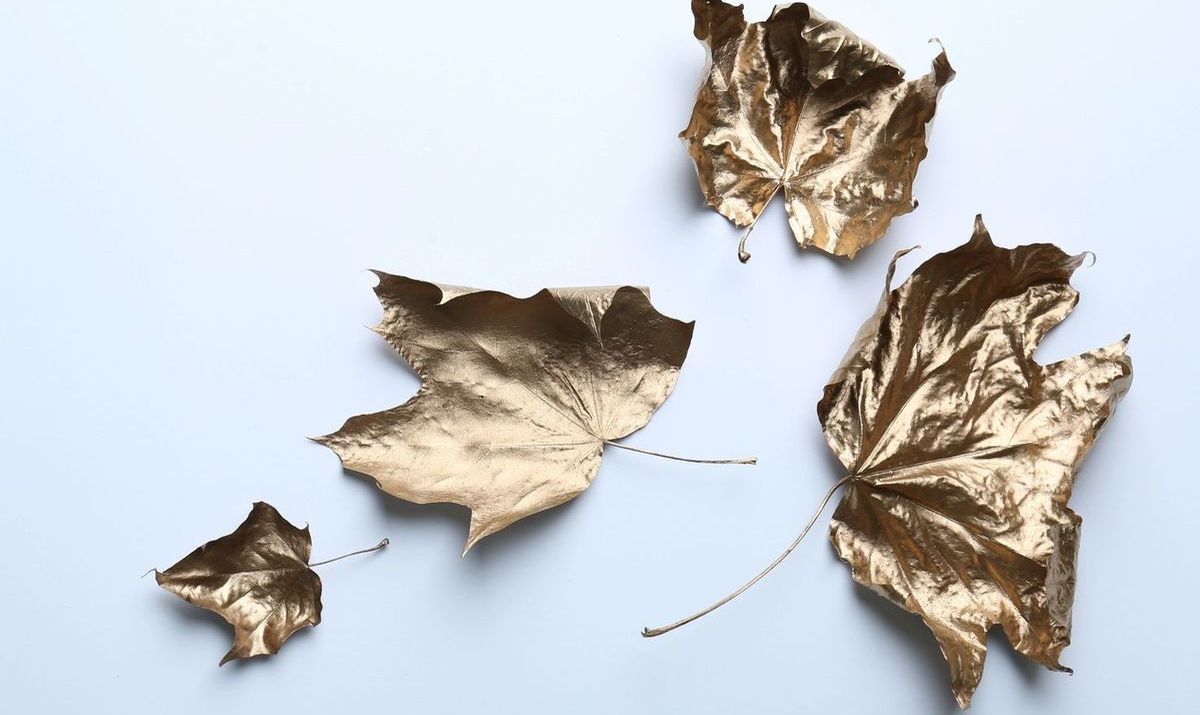
Die Herstellung von Blattgold
Das Schlagen von Blattgold ist eine echte Handwerkskunst, die auf eine lange Tradition zurückgeht. Um genauer zu sein, sind es sogar mehrere Traditionen.
Denn die unterschiedlichen Herstellungsverfahren von Blattgold haben verschiedene historische Ursprünge und reichen zum Teil sogar bis in die Antike zurück. Grundsätzlich wird zwischen der Herstellungsmethode der Gouache und der Mission unterschieden. Letztere ist ein wenig simpler und weniger traditionell.
Bei der Mission werden wasser- und auf Alkohol basierte Klebstoffe und teilweise auch Lacke eingesetzt. Der Einsatz der Chemikalien beschleunigt und vereinfacht das ursprüngliche Verfahren.
Bei der Gouache dagegen werden keine chemischen Hilfsmittel verwendet. Der ganze Prozess der Herstellung passiert in Handarbeit. Als erstes wird das Gold geschmolzen und laminiert. Das heißt, es wird immer wieder gewalzt, um die Dicke des Barrens kontinuierlich zu verringern.
Schließlich entsteht ein sehr dünnes Goldblech, das durch das Schlagen geklopft und in Form geschnitten wird. Zum Abschluss wird es geglättet, geschnitten und mit höchster Sorgfalt in Seidenpapier platziert.
So entsteht reines Blattgold, das für die Vergoldung von bearbeiteten und glatten Oberflächen aus Holz, Glas, Stein, Metall und Kunststoff eingesetzt werden kann…
Sierks Media / © Fotos: Anidimi (1), NewAfrica (1), de.depositphotos.com
➡️ Gefällt Ihnen?
👍 Online folgen:
Facebook |
Instagram |
LinkedIn |
Flipboard |
Pinterest |
Twitter
Seit Jahren vertrauen uns unzählige Menschen und nutzen unsere Online-Magazine.
The Sierks (Sierks Media) hat keine millionenschweren Eigentümer - und dennoch bieten wir alle Inhalte kostenlos an.
Wenn Ihnen unsere Arbeit gefällt, freuen wir uns über Ihre Unterstützung - egal ob klein oder groß.
Redaktion unterstützen und The Sierks einen ausgeben...




Goldgräber-Stimmung mit Delle – Barren jetzt bloß nicht verkaufen | Sierks.com
24. Juni 2025 at 14:26[…] kommt: In China und Indien, sonst die fleißigsten Goldhamster der Welt, hält man sich aktuell zurück. Möglicherweise herrscht dort gerade […]